AI agent agency vs freelancers: who should build your agents
When freelancers are enough for scripts and demos, and when an agent agency is the safer path for production workflows.
Written by Northstar
Northstar is an AI agent systems studio. Alex leads engineering and product systems; Jordan leads operations and workflow fit. We ship production agents inside tools teams already use.
Alex Morgan · LinkedIn · Northstar
Direct answer
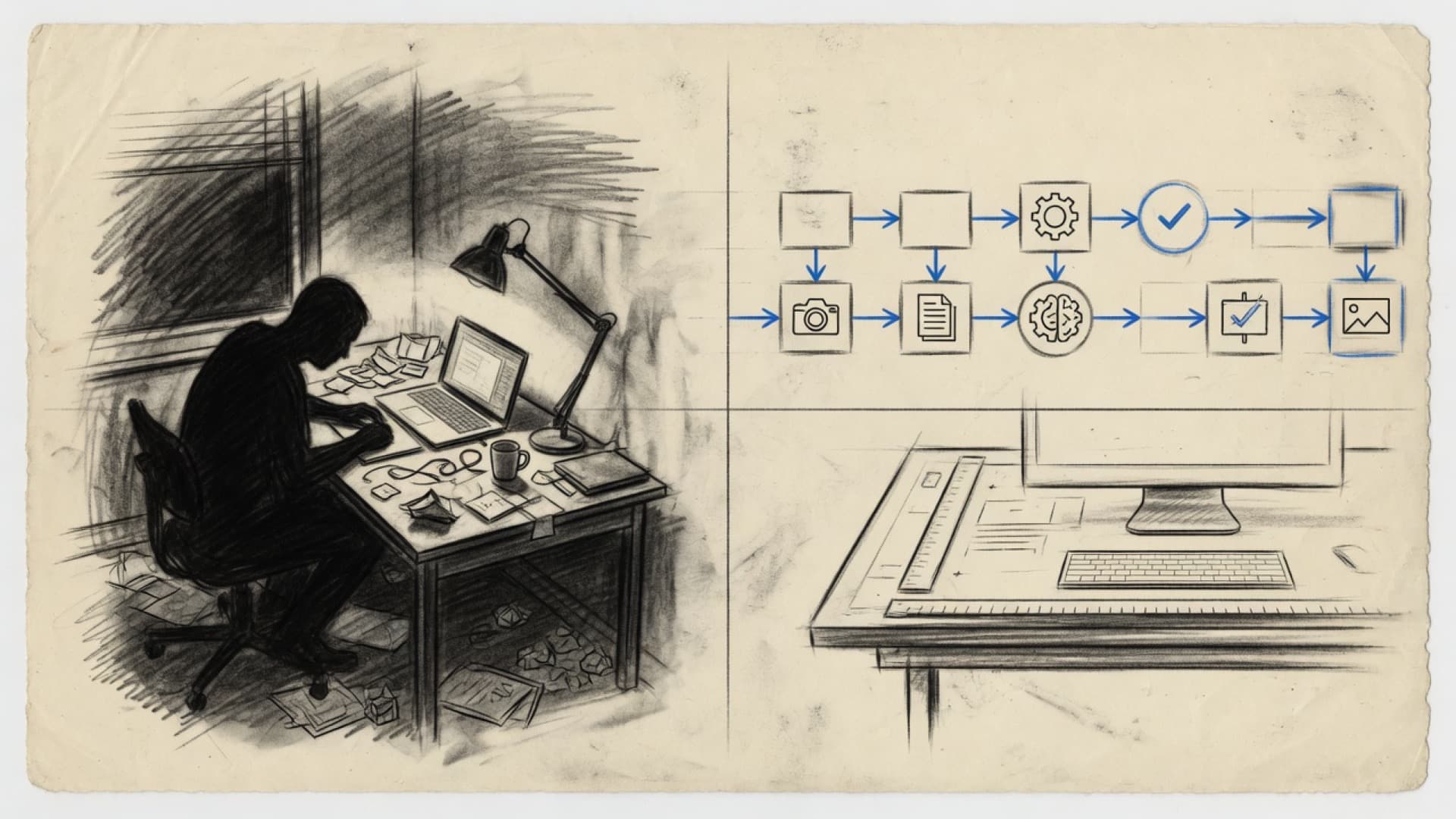
Hire freelancers for narrow scripts, prototypes, and one-off integrations you can own after delivery. Choose an AI agent agency when agents must run multi-step work across real tools, with approval gates, ops handoff, and ongoing failure modes. The expensive mistake is treating a production agent system like a weekend chatbot gig.
What freelancers are good at
- Single-tool automations and glue code
- Fast prototypes that prove a path
- Short engagements with a clear acceptance test
- Extending an already-owned internal system
For this kind of work a freelancer is often the better buy: less overhead, faster start, and you keep full ownership because the system was yours to begin with.
Where freelancers usually break
- No one maps the full workflow before coding
- No human approval model for irreversible actions
- Knowledge leaves when the contract ends
- "It works on my laptop" never becomes monitored production
- Nobody budgets LLM call costs, so the first real invoice is a surprise
- No support window: the contract ends at delivery, incidents start after it
None of this is about talent. Plenty of freelancers write better code than agencies. It is about scope: production agent systems need process discovery, gate design, monitoring, and someone reachable after go-live. That is an operations commitment, not a coding task.
What an agency should own
- Process discovery before build
- Tool boundaries, rules, and review queues
- Approval gates on risky actions, designed with your team
- Documentation your team can operate
- Evals you can rerun after every model or prompt change
- A path from pilot to steady-state ownership, including a support window
Decision table
| Signal | Freelancer | Agency |
|---|---|---|
| Scope | One script or demo | Multi-step production path |
| Risk | Low if it fails | High if wrong action ships |
| Ops | You maintain it | Shared handoff + training |
| Time | Days to weeks | Weeks with discovery |
| Auth surface | One tool, one key | Multi-tool credentials and scoping |
| Compliance | Light or none | Access rules, logs, audit trail |
| On-call | Ends with the contract | Defined in the retainer |
| Documentation | Optional, often skipped | Part of the deliverable |
The cost-of-failure math
Day rates make freelancers look cheap. Price the downside instead:
- List the actions the agent can take: send, write, update, refund, delete.
- For each action, estimate the cost of one wrong execution - a bad email to a customer list, a corrupted CRM field at scale, an incorrect refund batch.
- Multiply by how often that action runs per week.
- Compare that exposure with the price gap between the freelancer bid and the agency bid.
For a read-only reporting agent, exposure is near zero and a freelancer is the rational choice. For an agent that writes to customer-facing systems, the exposure usually dwarfs the fee difference within the first month.
Questions to ask a freelancer before agent work
- Who maps the workflow before coding, and in what artifact?
- Which actions will require human approval, and how is the review queue built?
- Where do logs and traces live after you leave?
- What is the eval set, and how do we rerun it after a model update?
- How are secrets and API keys stored?
- What will LLM calls cost at our volume, and who pays?
- What exactly is in the handoff package?
- What support do you offer after delivery, at what rate and response time?
- What happens if you are unavailable for two weeks?
- Who owns the code, prompts, and eval sets?
A senior freelancer answers these easily. Silence on three or more means you are buying a demo, whatever the proposal says.
What a transferable delivery package contains
Whoever builds - freelancer or agency - a production system ships with:
- Repository access with a README your team can actually follow
- A runbook: how to start, stop, and recover the agent
- A gate map: which actions are gated and who approves them
- An eval set with pass thresholds and instructions to rerun it
- A credentials plan: where secrets live and how to rotate them
- Known limitations and exclusions, in writing
If a bid does not include this package, add the cost of producing it later - usually by a different person reverse-engineering the system.
Practical rule
If losing the builder for two weeks would freeze the system, you do not have a freelancer task - you have an ownership problem. Either staff in-house or hire a studio that designs for transfer.
The combination also works: an agency defines architecture and gates, then freelancers own thin, well-bounded slices inside those boundaries. That keeps day rates where they help and ownership where it belongs.
How Northstar approaches this
Northstar is an agent systems studio: engineering plus operations. We map workflows, define gates, and implement inside tools your team already uses. See solutions or start with an audit.
FAQ
Yes. Freelancers can own thin slices after the architecture and gates are clear. The failure mode is the reverse order: freelance build first, architecture never.