Production AI Agents: Definition, Architecture, and Controls
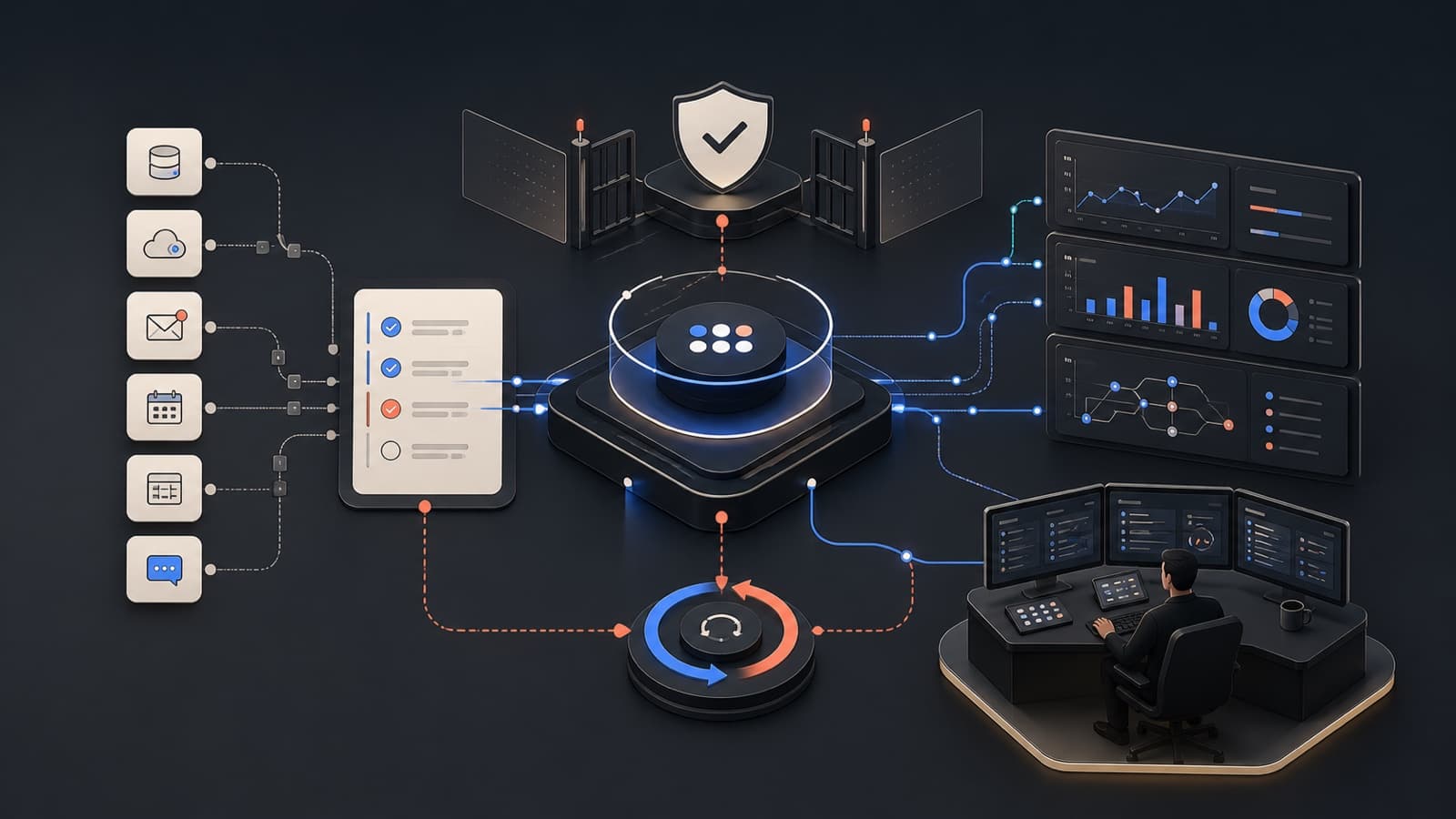
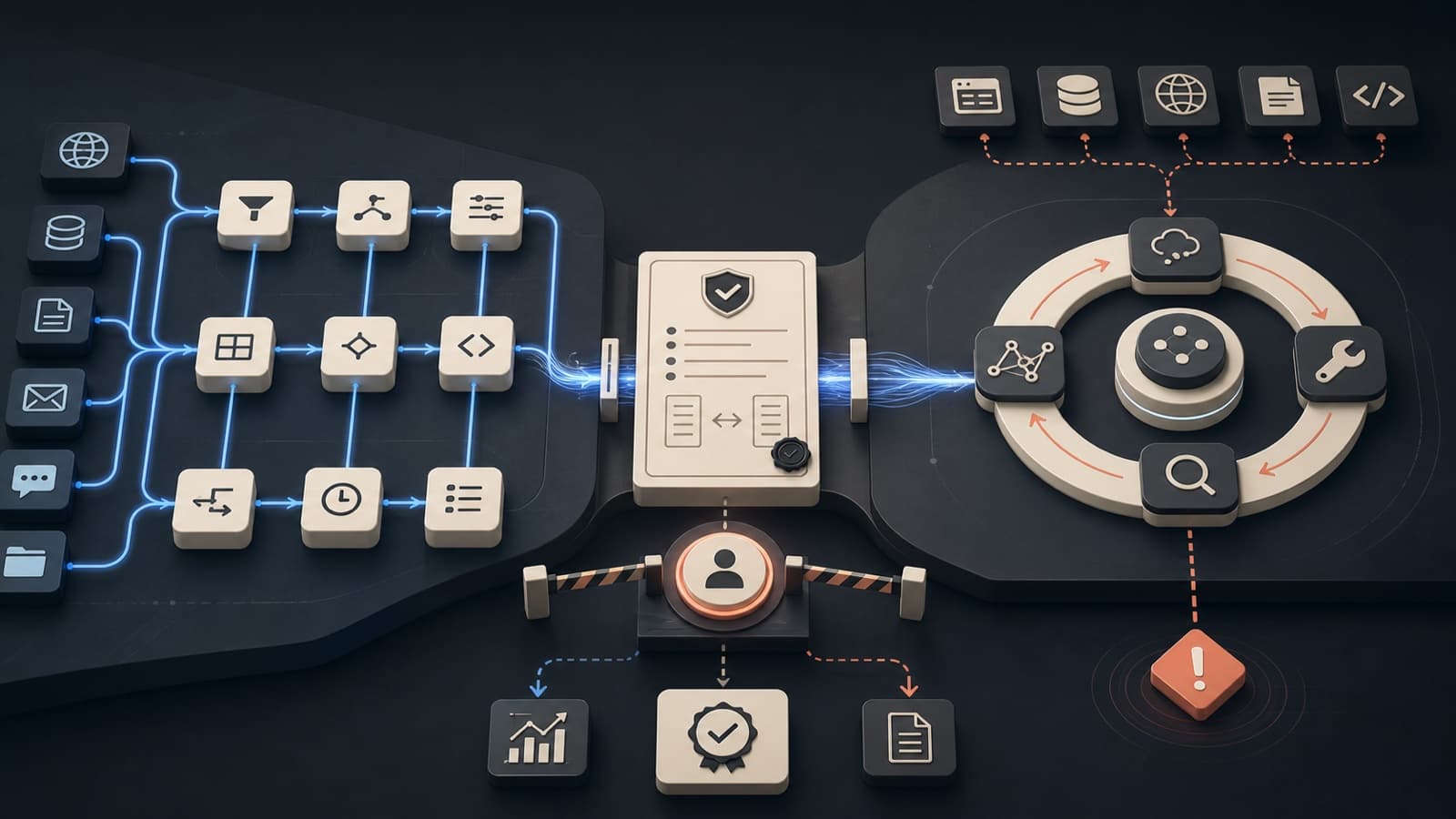
What a production AI agent is, how it differs from demos and chatbots, the five properties that earn production, wrapper architecture, failure modes, and real workflow examples.
Blog
Definitions, boundaries, and first-principles guidance for understanding what production agents are and when they fit.
8 articles
What a production AI agent is, how it differs from demos and chatbots, the five properties that earn production, wrapper architecture, failure modes, and real workflow examples.
Eight stop conditions for AI agents: when process, data, ownership, or volume make agents the wrong tool. What to use instead, when to revisit, and how research frames production failure risk.
Clear taxonomy for buyers: chatbot, copilot, RPA, and production AI agents - what each can and cannot own.
When Zapier, Make, or n8n is enough, when platform Agents are still automation with LLM steps, and when you need production agent systems with gates, evals, and ownership.
How agent-first products differ from chat bolted onto a legacy UI - and what to design first.
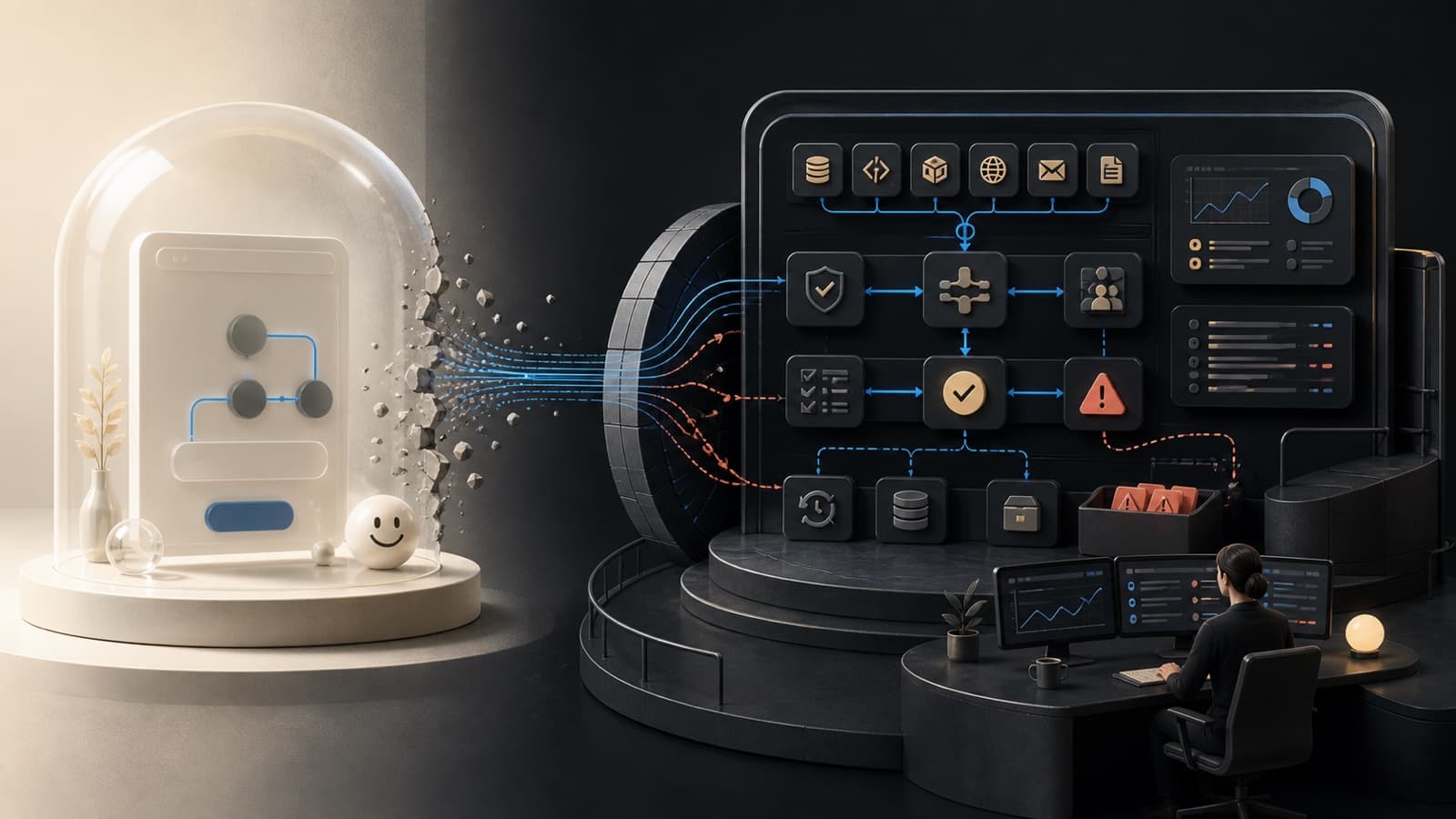
Clear contrast between AI agent demos and production systems: tools, permissions, gates, evaluation, failure handling, and a buyer test vendors fail.
A plain definition of production AI agents for business teams: tools, gates, ownership, measurement - not demos.
Founder FAQ before AI agents: what to automate, what not to, cost, risk, team impact, and first pilot choice.